How the Programme Developed
Several schemes preceded the current one. The consolidation that produced today DSP.
Vanuatu's citizenship by investment (CBI) story is one of meteoric rise and sudden challenge. It began in 2015, a simple plan to attract foreign cash by selling passports. Fast. For a time, it was one of the most popular CBI options on the planet. But the program's success became its biggest problem, leading to a dramatic suspension of its European visa-free travel rights in 2023 over security concerns. What happened here serves as a potent case study in the high-stakes world of economic citizenship.
The Republic of Vanuatu is an archipelago nation floating in the South Pacific Ocean, independent since 1980. Its economy, traditionally built on agriculture and tourism for its 300,000 people, was fundamentally reshaped when investor citizenship schemes emerged as a dominant source of government revenue.
How Did Vanuatu's Citizenship by Investment Programmes Begin?
Vanuatu's modern CBI programmes were born from crisis. The nation was already seeking foreign investment to grow its economy, but the devastating Cyclone Pam in March 2015 created a desperate, immediate need for reconstruction funds. In this urgent moment, the government saw investor citizenship as a way to generate significant state revenue—and quickly.
Just two months later, in May 2015, the first official schemes launched. According to EU records, the initial landscape was a bit messy, with several competing programmes running at once before the government eventually consolidated them into a more streamlined offering.
The Original Capital Investment Immigration Plan (CIIP)
Among the earliest versions was the Capital Investment Immigration Plan (CIIP). Though now defunct, the CIIP was designed to pull in capital by offering citizenship for an investment. Its core appeal was simple: speed and relative affordability. Compared to the established, expensive programmes in Europe and the Caribbean, it was a bargain. This early plan helped build Vanuatu’s reputation as the fast track to a second passport.
The Rise of the Vanuatu Development Support Program (DSP)
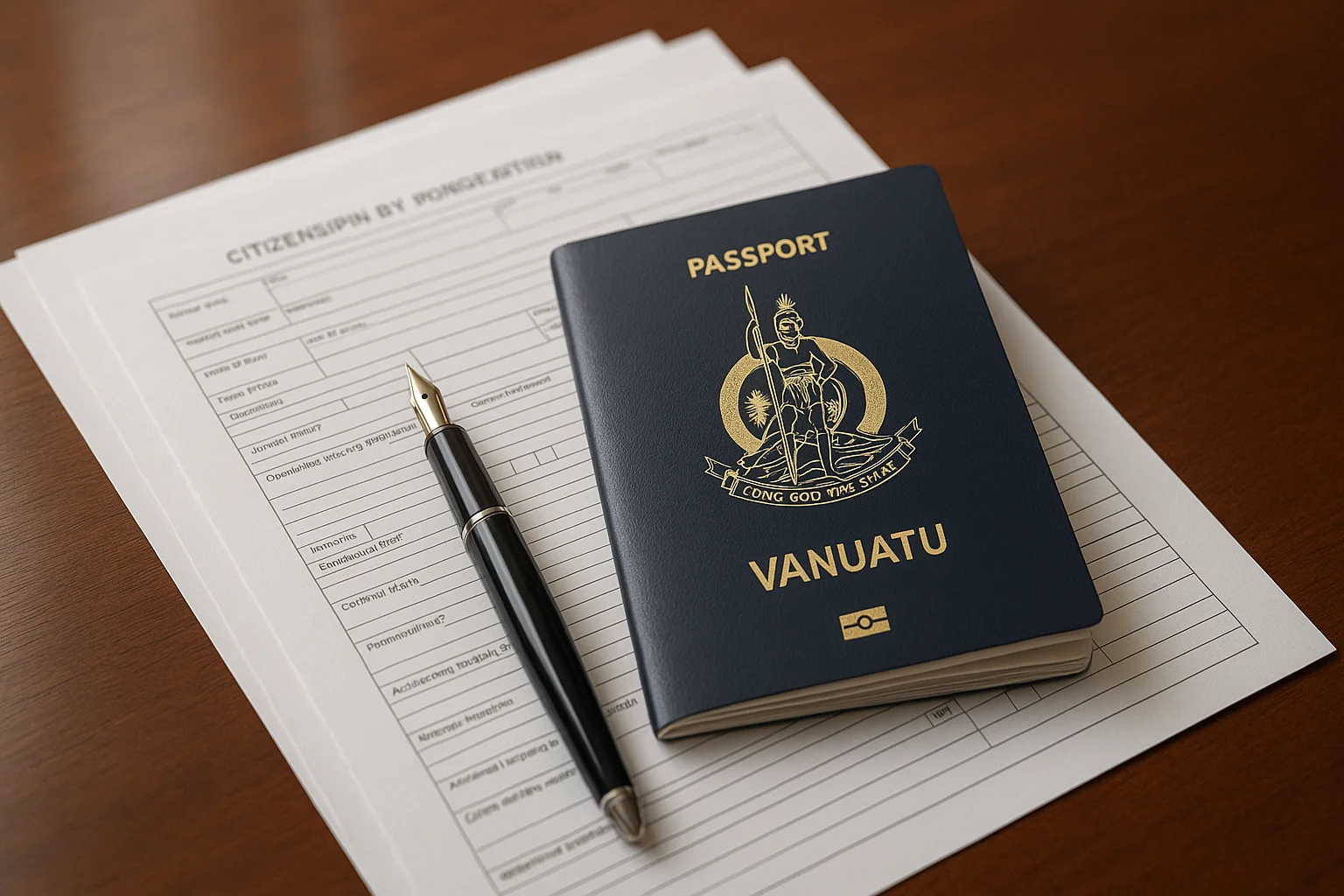
Eventually, the Vanuatu Development Support Program (DSP) became the main, government-sanctioned route to citizenship. The model is straightforward: applicants make a large, non-refundable donation directly into a national development fund. Those funds are then earmarked for infrastructure, disaster relief, and general economic support.
The DSP's defining characteristic has always been its speed. It was marketed—and often delivered—as the fastest CBI programme in the world, with processing times measured in months, not years. This raw efficiency, coupled with a simple donation model, made it a magnet for a global pool of investors.
What Were the Main Benefits Driving the Programme's Popularity?
During its golden age, the Vanuatu passport wasn't just a document; it was a powerful tool for global mobility. The program's immense popularity rested on a few key factors that, together, created an almost irresistible value proposition for investors.
How Powerful Was the Vanuatu Passport?
The heart of any CBI programme is its passport power, and initially, Vanuatu’s was formidable. It offered visa-free or visa-on-arrival access to over 130 countries and territories.
But the real prize was access to the European Union's Schengen Area. An EU-Vanuatu visa-waiver agreement took effect on 28 May 2015, allowing Vanuatu citizens to travel the Schengen zone for 90 days out of any 180-day period. This single benefit put Vanuatu's programme on par with far pricier Caribbean options and became the primary engine of its growth.
What is Vanuatu Citizenship and What Rights Does It Grant?
Successful applicants receive full, irrevocable, and lifelong citizenship in the Republic of Vanuatu. This is not just a residency permit; it's a complete change of legal status. New citizens get a passport and can live and work in the country just like anyone born there.
Crucially, this citizenship is hereditary. It can be passed down to an investor's children and grandchildren, securing a legacy. The other major draw is Vanuatu's tax environment. With no personal income tax, no inheritance tax, and no capital gains tax, the nation presents an attractive financial haven for preserving wealth.
Where is Vanuatu?
Vanuatu is a sovereign island nation in Oceania, about 1,750 kilometres (1,090 miles) east of northern Australia. Made up of 83 islands, its remote location and peaceful, politically neutral standing as a member of the Commonwealth of Nations appealed to investors looking for a "Plan B." It was seen as a safe harbour, far from global conflicts. The nation’s young population (median age 21.5) and pristine environment only added to its allure.
Why Did the EU Suspend Visa-Free Travel for Vanuatu Citizens?
The critical blow to Vanuatu's CBI programme came when the European Union pulled the plug on its visa-waiver agreement. This decision wasn't made in a vacuum. It was the result of mounting security fears across the EU about "golden passport" schemes in general, with officials deciding Vanuatu's programme posed an unacceptable risk.
EU regulations spelled out the specific failings: an extremely low rejection rate, no physical residency requirement, astonishingly short processing times, and a critical lack of due diligence and information sharing. Brussels concluded that these flaws created a backdoor into Europe. Individuals who could never pass a regular Schengen visa security check were gaining visa-free access simply by buying a passport.
The Warning Signs: Low Rejection Rates and Rapid Growth
The sheer scale and speed of the programme’s growth set off alarm bells in Brussels. Commission Implementing Regulation (EU) 2022/693 noted that by March 2021, Vanuatu had issued over 10,500 passports through investment. The vetting process clearly hadn't scaled with the volume.
The most damning statistic the Commission found was the programme's rejection rate. By the end of 2020, only one single application was known to have been turned down. This wasn't just low; it was a clear signal to EU authorities that the due diligence process was likely a rubber stamp, not a genuine security screening, creating a serious risk to the Union.
A Timeline of the EU Suspension
The suspension didn't happen overnight. It was a deliberate, phased process guided by EU law, and the official regulations document the timeline:
- March 2022: The European Commission proposed a partial suspension of the visa-waiver agreement, citing security risks in Commission Implementing Regulation (EU) 2022/693.
- 4 May 2022: The EU Council made it official. The partial suspension applied to all ordinary passports Vanuatu had issued since 25 May 2015—the start of the modern CBI era.
- 4 February 2023: After a period of failed dialogue, the hammer fell. The suspension became total, affecting every Vanuatu passport holder, regardless of when their passport was issued.
- May 2024: The EU reviewed the situation. Finding its core security concerns unresolved, it extended the suspension until at least 3 February 2025 via Commission Delegated Regulation (EU) 2024/2059, sending a clear message that Vanuatu's reforms were not yet enough.
What is the Current Status and Future of Vanuatu's CBI Programme?
Losing EU access shattered the core value of Vanuatu citizenship. Now, the government, agents, and potential clients are all forced to reconsider what the programme is actually worth. The central question is whether it can adapt and ever regain its former prestige.

The Updated Vanuatu Visa-Free Countries List
As of 2026, the new reality is stark: Vanuatu passport holders cannot enter the 29-country Schengen Area without a visa. The United Kingdom, citing similar security worries, also revoked its visa-free arrangements in July 2023. The passport's power has been dramatically reduced.
Today, the visa-free and visa-on-arrival list sits at roughly 97 countries. While this is a big drop, the passport still provides useful access to key business and travel hubs like Hong Kong, Singapore, and Russia—destinations not easily accessible with every passport. Still, the loss of Europe is a massive, undeniable drawback.
Government Reforms and Attempts to Regain EU Access
Vanuatu's government has publicly owned the EU's concerns and says it has started a series of reforms to strengthen the programme. The goal is to regain visa-free access by showing Brussels it's serious about security. Pledged reforms include:
- Upgrading due diligence procedures and tightening background checks.
- Applying stricter eligibility criteria for who can even apply.
- Improving intelligence and data sharing with international security partners.
- Potentially making fundamental changes to how the programme is structured.
Despite these promises, the EU's decision to extend the suspension into 2025 shows that, so far, the reforms have not satisfied Europe's high-security threshold. The entire future of EU-Vanuatu travel now hinges on whether these changes are actually implemented, verified, and deemed sufficient.
Is Vanuatu Residency by Investment an Alternative?
You may hear "Vanuatu residency by investment" mentioned, but it’s important to be clear. Unlike countries like Portugal or Greece, Vanuatu does not have a formal, standalone "golden visa" or residency programme. The national focus has always been on the direct path to full citizenship. While obtaining residency through other legal channels might be possible, it is not the primary investment immigration route the country markets or supports.
This article is published by an independent law firm for informational purposes only and does not represent or claim affiliation with any government body, international organization, or official authority.
Questions
Frequently Asked Questions
Put simply, it's full legal citizenship in the Republic of Vanuatu. This isn't a temporary visa; by making a significant financial contribution to the country's Development Support Program (DSP), you acquire a lifelong status. This grants the holder a passport and the same rights as any native-born citizen. Crucially, the citizenship is hereditary, which means it can be passed down to your future generations, securing your family’s legacy.
Vanuatu is a sovereign island nation in the South Pacific Ocean, a member of the Commonwealth of Nations. Picture an archipelago of 83 islands scattered roughly 1,750 kilometers (1,090 mi) east of northern Australia. It sits northeast of New Caledonia, east of New Guinea, southeast of the Solomon Islands, and west of Fiji. This location in a less-congested part of the world is a key part of its appeal for many investors seeking a peaceful second home. { "@context": "https://schema.org", "@type": "Article", "headline": "A Comprehensive Vanuatu CBI History: From Golden Ticket to Global Scrutiny"
Contact Us
Schedule Your Free Case Evaluation Today
Share the details of your situation with our team, and we'll provide a prompt, confidential response. We're here to listen, answer your questions, and help you understand your legal options.
Send Us a Message
Reach Us Directly
All consultations are strictly confidential and protected by legal professional privilege.